COMMERCIAL WINDOW ACTUATION
Window actuators selected around the opening and the required operation.
Actuator selection determines more than whether a window opens. EBSA considers opening geometry, sash size and load, required stroke and opening angle, operating and closing forces, speed, synchronisation, mounting, feedback and the way the opening must behave within the wider facade system.
Working across the D+H Mechatronic drive range, EBSA develops actuation around commercial project requirements — from individual automated openings to large coordinated facade systems using multiple drive types and control architectures.
The actuator follows the opening. The opening should not have to be redesigned around a convenient motor.
OPENING → GEOMETRY → DRIVE ARRANGEMENT
01
OPENING FIRST
Geometry and required operation before actuator family
02
ACTUATION ENGINEERING
Stroke, force, speed, mounting and drive arrangement
03
COORDINATED MOVEMENT
Single and multi-drive openings engineered as one operating element
04
COMPLETE SYSTEM
Actuation coordinated with wiring, controls, feedback and commissioning
ACTUATOR SELECTION
The actuator follows the window geometry — not the other way around.
A suitable actuator has to move the opening through the required geometry, achieve the intended open position, close the element correctly and operate consistently within the control strategy. That requires more than matching a nominal force rating to a sash.
EBSA considers the complete opening condition — including dimensions, weight, hinge or pivot arrangement, seals, brackets, available mounting space, environmental exposure, required operating behaviour and the relationship between the actuator and the control system.
01
WINDOW + OPENING GEOMETRY
02
REQUIRED OPENING / STROKE
03
LOADS + FORCES
04
MOUNTING + BRACKETS
05
DRIVE TYPE + ARRANGEMENT
06
CONTROL + FEEDBACK
07
TESTING + COMMISSIONING
01
OPENING GEOMETRY
Understand the opening type, hinge or pivot condition, dimensions, required angle and available actuator position.
02
STROKE + OPENING
Determine the actuator travel and geometry needed to achieve the required opening without treating nominal stroke as the only design parameter.
03
FORCE + CLOSING
Consider operating loads, closing behaviour, seals and the forces created through the actual bracket and window geometry.
04
SPEED + ACOUSTICS
Match operating speed and noise expectations to the building use and required sequence.
05
MOUNTING + ACCESS
Resolve brackets, structure, clearances, cable routes and future access before the installation becomes difficult to service.
06
SAFETY + USER INTERACTION
Consider the way people may interact with the opening and the operating strategy appropriate to the application.
Actuator selection is the result of the opening geometry and operating requirement, not the starting point.
ACTUATOR TYPES
Choose the actuation principle around the application.
CHAIN ACTUATORS
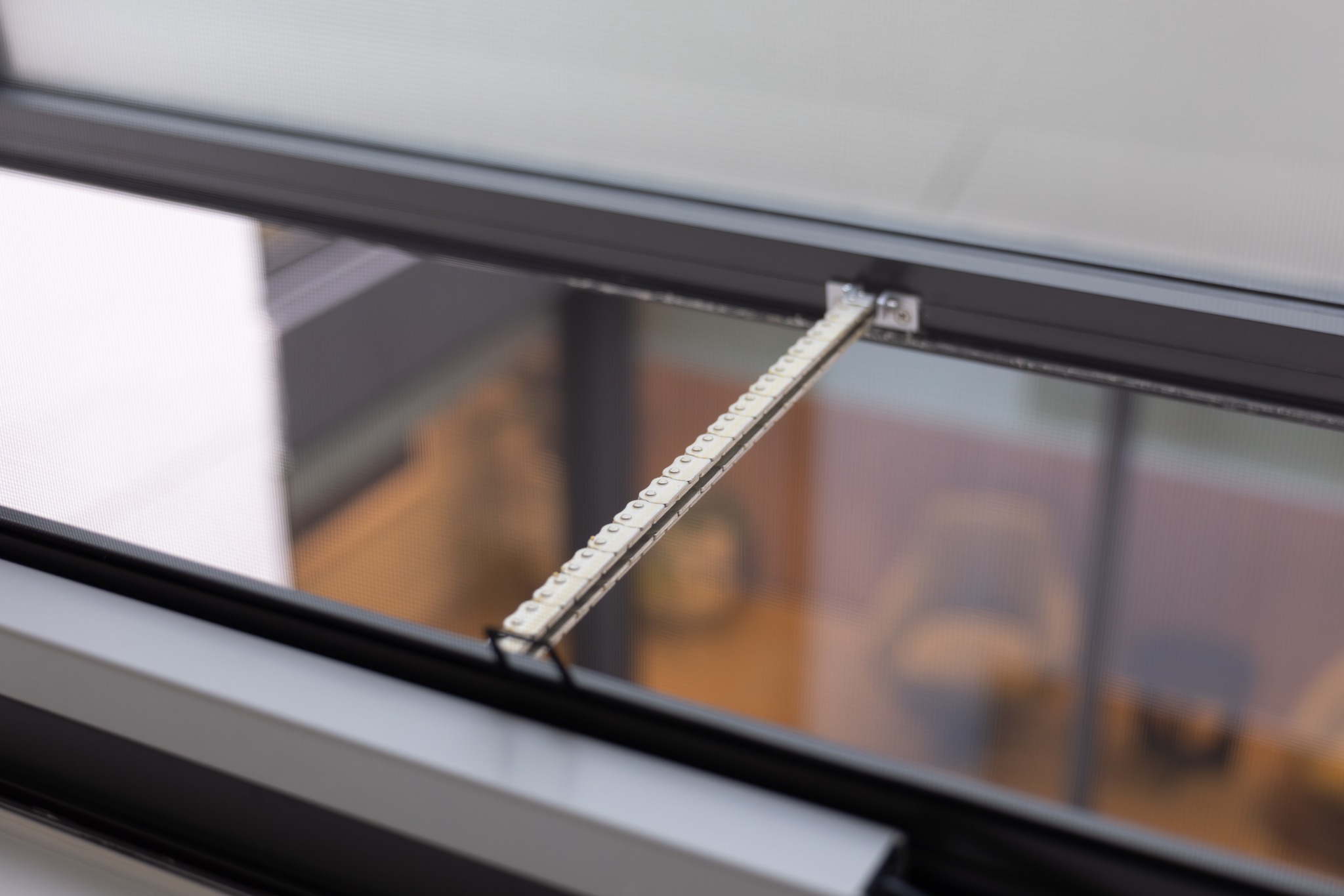
Compact and versatile actuation for a wide range of commercial window applications, with different D+H families supporting different dimensions, forces, strokes, control technologies and installation conditions.
Explore Chain ActuatorsRACK + PINION ACTUATORS
Robust linear actuation for applications requiring greater stroke, force or a drive arrangement better suited to the opening geometry.
Explore Rack + Pinion Actuators
LOUVRE DRIVES
Purpose-designed drive solutions for automated louvre mechanisms and facade elements requiring controlled, repeatable rotary or linked movement.
Explore Louvre Drives
SPECIALIST DRIVES
Locking, side-hung, door, rooflight and other drive technologies for opening geometries that require a more specialised actuation approach.
Explore Specialist Drives
CHAIN ACTUATORS
Compact actuation across a wide range of commercial window applications.
Chain actuators are widely used where the project needs a compact drive that can be integrated cleanly with the window or facade system. Final selection depends on the opening geometry, actuator position, stroke, force, speed, control requirement and whether one or multiple drives are needed.
Current D+H chain-drive families used across EBSA window-automation applications include VCD, CDC, KA, CDM and CDP. These families provide different pathways through compact, standard, higher-capability and specialist chain-drive requirements; the correct family is selected after the opening and system requirements are understood.
VCD
CDC
KA
CDM
CDP
RACK + PINION ACTUATORS
Linear drive solutions for demanding opening geometries.
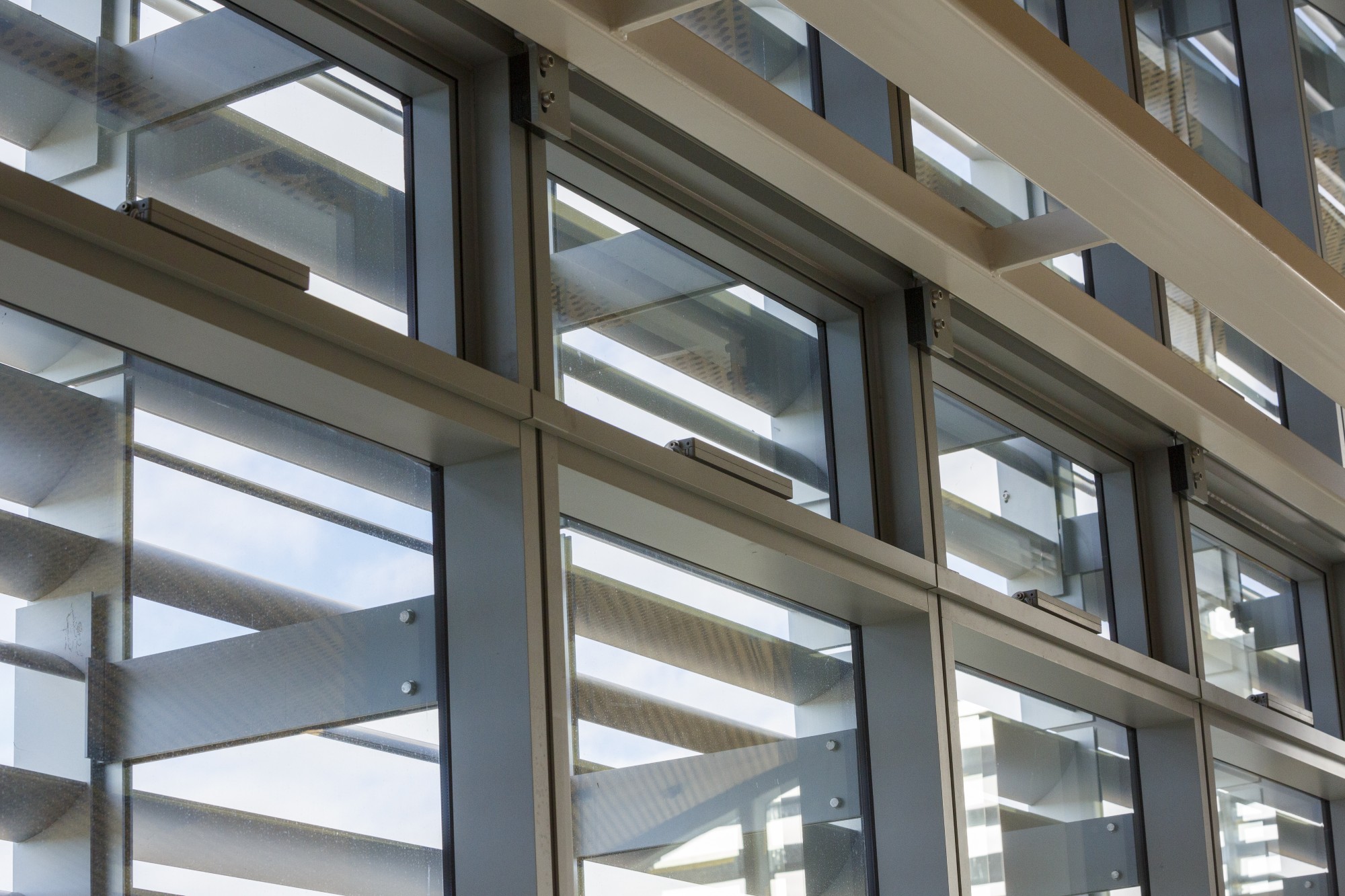
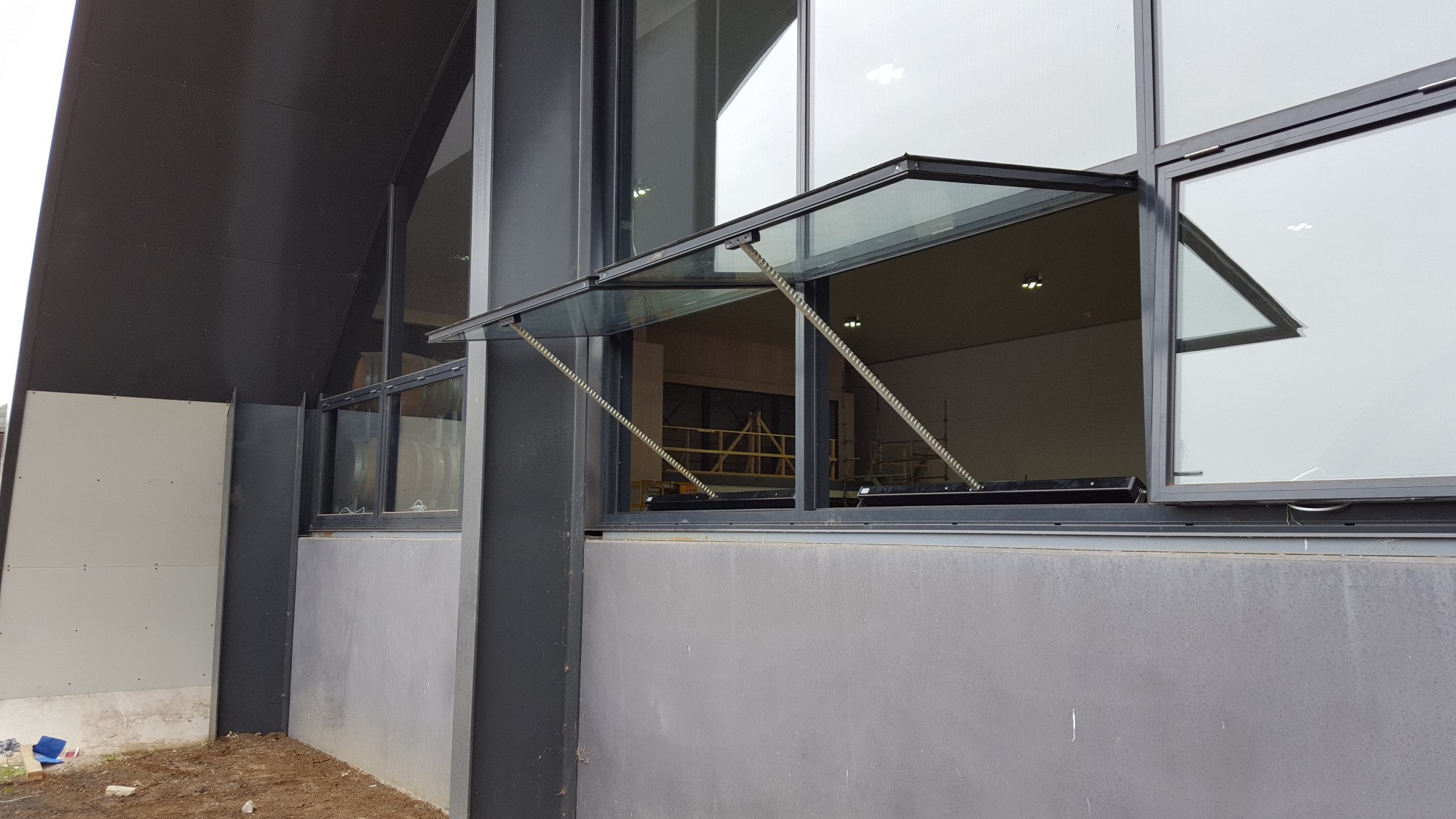
Rack-and-pinion actuation provides a robust linear-drive pathway for commercial facade elements where the opening condition calls for longer travel, higher operating forces or a drive form better suited to the installation than a chain actuator.
Current D+H pathways include ZA and DXD families. As with chain drives, selection depends on the complete opening and control requirement rather than the actuator family name alone.
ZA
DXD
TECHNICAL MEDIA PLACEHOLDER
LINEAR MOVEMENT
DEMANDING GEOMETRY
LONGER TRAVEL / HIGHER FORCE APPLICATIONS
SPECIALISED ACTUATION
Not every operable facade element behaves like a conventional window.
LOUVRE DRIVES
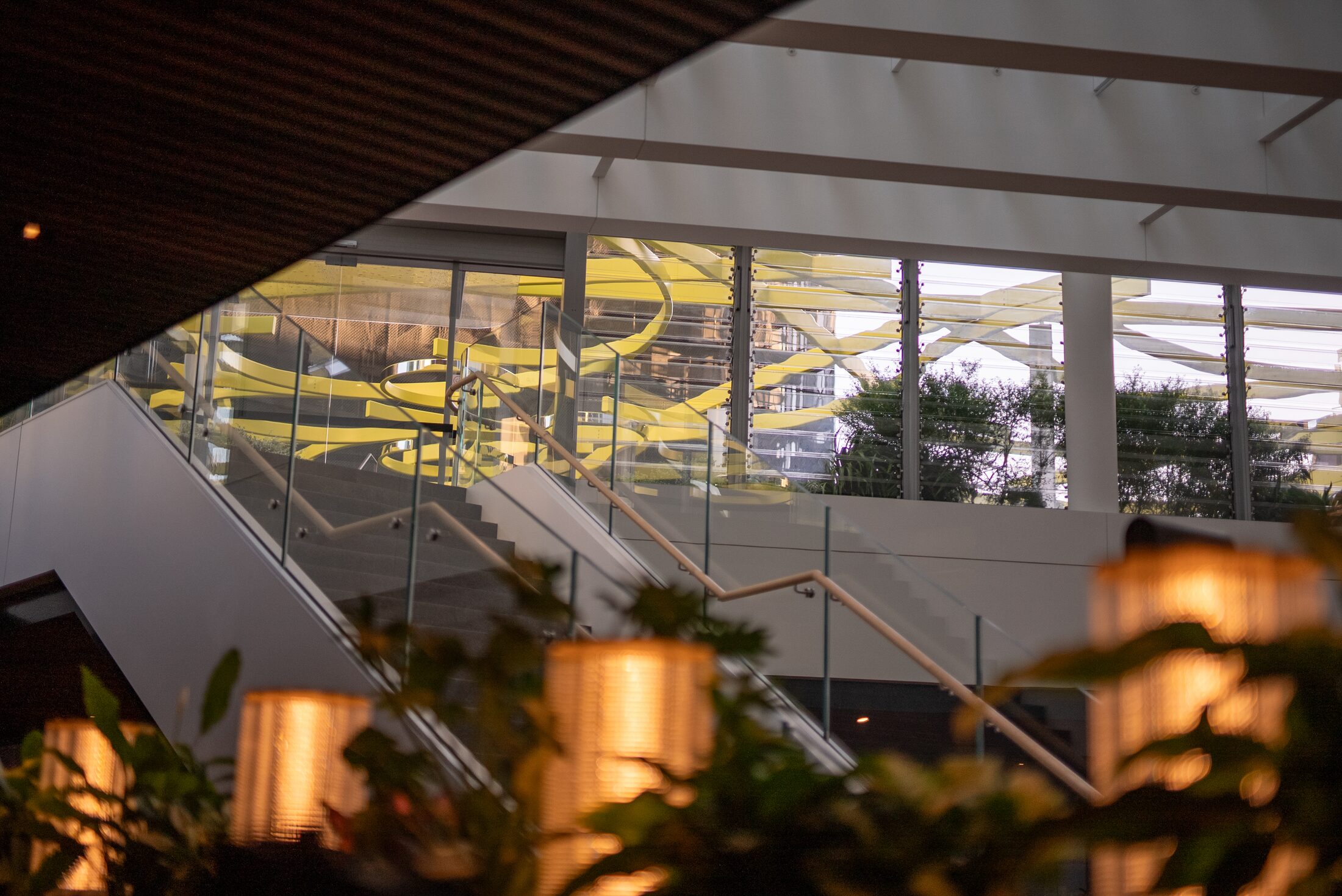
Operable louvres require coordinated movement through a louvre mechanism rather than simply pushing or pulling a sash. D+H LD drive technology provides a dedicated pathway for applicable automated-louvre systems, with the complete solution coordinated around the louvre mechanism, geometry, control requirement and facade application.
Explore Louvre Drives
SPECIALIST DRIVES
Some facade elements require dedicated locking, side-hung, door-opening, rooflight or other specialist drive arrangements. EBSA assesses these applications around the actual movement, loads, interfaces and maintenance requirements rather than forcing them into a standard window-actuator solution.
LOCKING
SIDE-HUNG
DOOR-OPENING
ROOFLIGHT
OTHER SPECIALIST MOVEMENT
Explore Specialist Drives
The drive type changes with the opening. The engineering principles do not.
COORDINATED MOVEMENT
Large and complex openings may need more than one drive.
Window width, stiffness, load distribution, sealing and the required movement can make a multi-drive arrangement more appropriate than a single actuator. In those applications, drive quantity and position, mechanical loading, synchronisation, control architecture and commissioning need to be considered together.
EBSA develops multi-drive openings as one operating element rather than treating each actuator as an independent motor. Depending on the selected D+H family and control architecture, suitable synchronised or addressed drive technologies can support coordinated movement, configuration, status and diagnostic functions.
Adding actuators is not the same as engineering a multi-drive opening.
DRIVE 01
DRIVE 02
DRIVE 03
ONE OPENING ELEMENT
COORDINATED MOVEMENT → CONTROL ARCHITECTURE
ACTUATION + CONTROLS
The actuator is one part of the operating system.
Drive selection affects the electrical load, power supply, wiring, grouping, feedback and control functions that sit behind the opening. The control architecture in turn determines how the actuator is commanded, monitored and coordinated with other openings and building systems.
Depending on the selected actuator and system architecture, D+H technologies can support functions such as synchronised operation, configuration, position or status information and diagnostics. EBSA considers those requirements during actuator selection rather than treating controls as a separate decision after the hardware has been chosen.
01
OPERABLE ELEMENT
02
ACTUATOR + MOUNTING
03
FIELD WIRING
04
CONTROL ARCHITECTURE
05
FEEDBACK / STATUS
06
BUILDING INTERFACES
07
COMMISSIONING
WINDOW ACTUATORS IN PRACTICE
Different openings require different actuation strategies.
Project scale alone does not determine actuator selection. EBSA’s project work ranges from large repeatable facade systems to specialist openings where geometry, drive arrangement or control behaviour demands a different solution.
FEATURED PROJECT
ATLASSIAN CENTRAL — SYDNEY
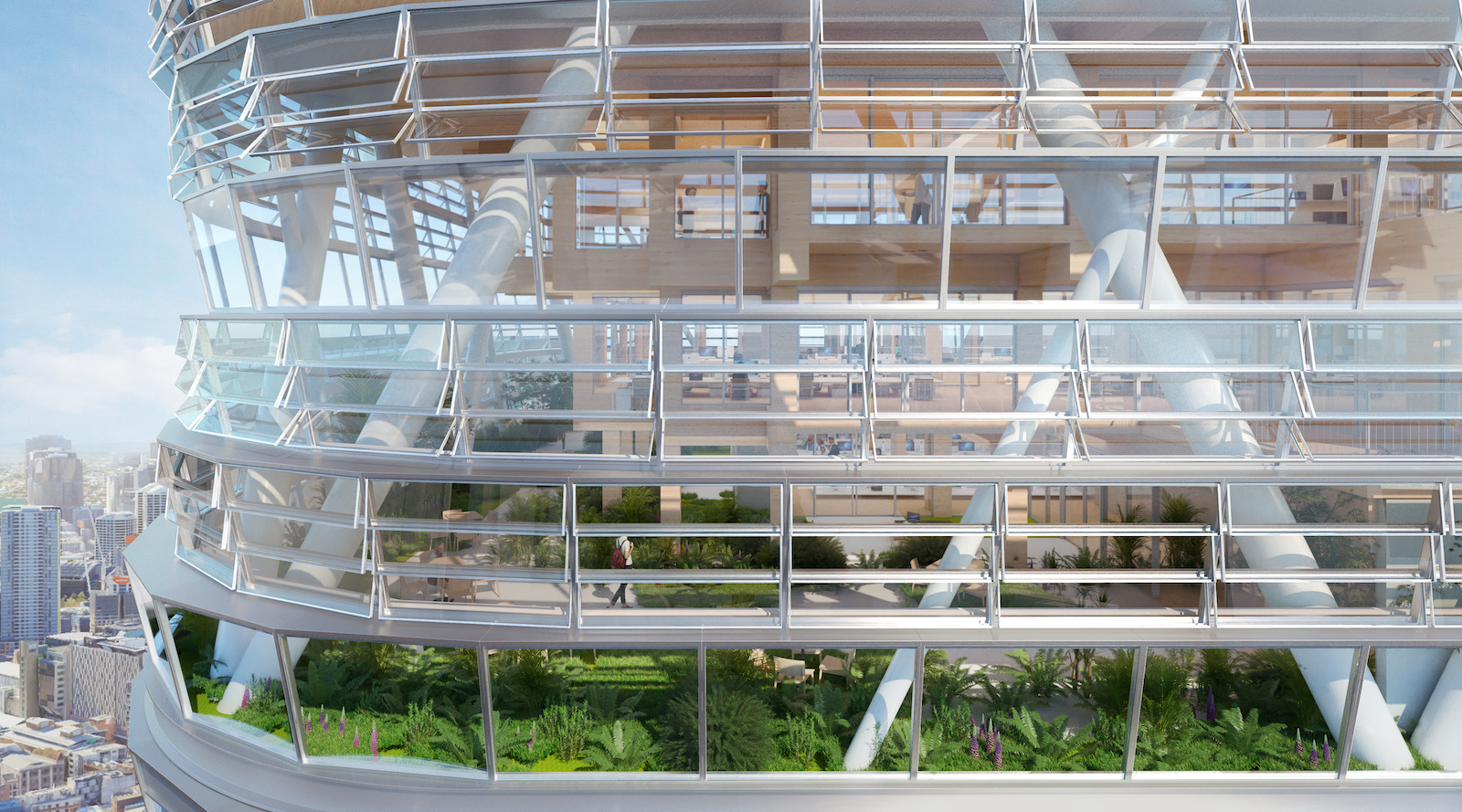
Thousands of actuators coordinated across stacked habitat zones.
Across Atlassian Central’s habitat floors, EBSA’s facade automation package includes 4,757 D+H CDC actuators integrated with distributed controls, field wiring and the wider building operation. The project demonstrates repeatable actuation delivered at tower scale as part of one coordinated facade system.
View Atlassian Central
SECONDARY PROJECT
55 PITT STREET — SYDNEY
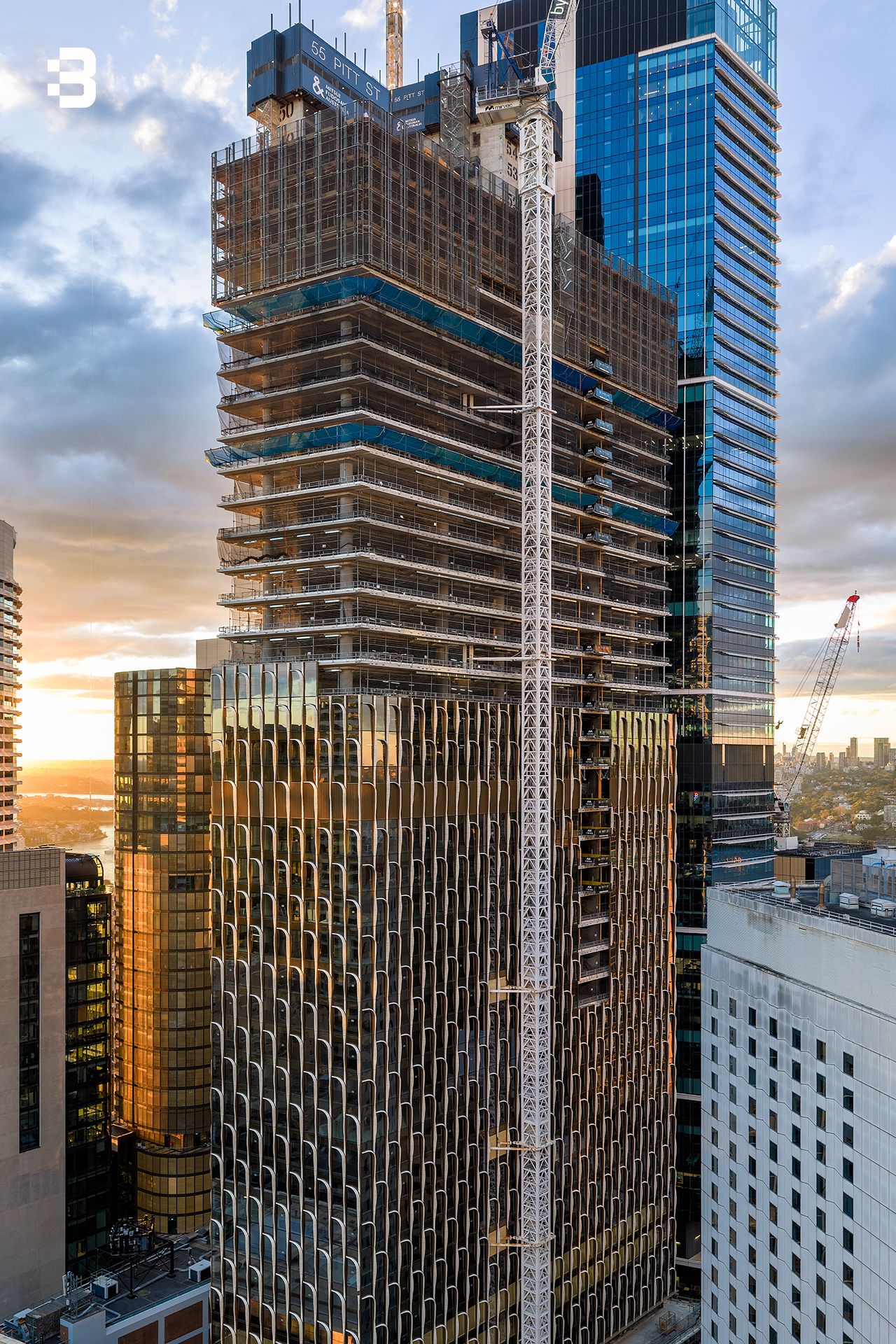
Specialist multi-drive actuation developed around the window geometry.
EBSA’s window-automation scope uses D+H CDM drives in a specialised arrangement with three drives mounted vertically to each applicable window, demonstrating how actuator quantity, position and drive type can be developed around a demanding facade opening rather than a standard hardware layout.
View Project
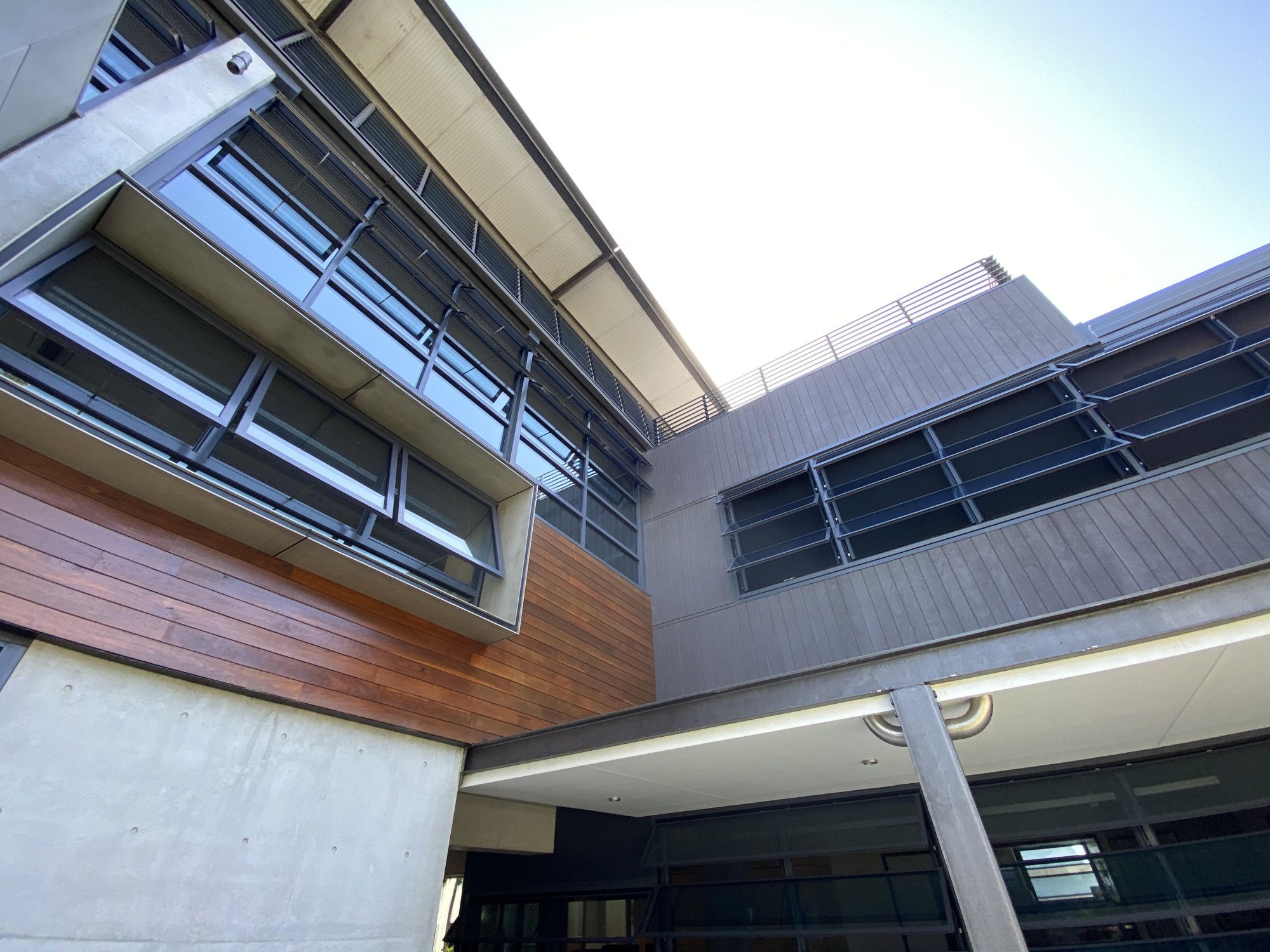
SECONDARY PROJECT
NORTHERN BEACHES CHRISTIAN SCHOOL — SYDNEY
Different chain-drive families coordinated across a multi-stage natural-ventilation system.
Across multiple project stages, EBSA delivered facade automation using CDC and VCD drives together with controls, weather sensing and mechanical-system integration, demonstrating how actuator selection can vary within one broader ventilation strategy.
View Project
TECHNICAL RESOURCES
Actuator guidance for designers, facade teams and specifiers.
EBSA’s technical resource library supports the decisions that sit behind actuator selection, mounting, electrical coordination, control architecture and ongoing system performance.
01
WINDOW ACTUATOR SELECTION GUIDE
Understand how opening geometry, stroke, force, speed, synchronisation, mounting and control requirements influence actuator selection.
02
WINDOW AUTOMATION ELECTRICAL REQUIREMENTS
Coordinate power supplies, field cabling, voltage drop and communication requirements around the selected actuator and control architecture.
03
AUTOMATED WINDOW SAFETY
Consider operating behaviour, user interaction and the safety strategy appropriate to the application.
04
CAD + BIM + DOWNLOADS
Access available drawings, product documentation and digital design resources for the selected actuator families.
05
LEGACY D+H PRODUCT SUPPORT
Identify installed or superseded D+H actuators and develop appropriate replacement, compatibility, service or upgrade pathways.
FROM SELECTION TO COMMISSIONING
Carry the actuator decision through the complete project.
The correct actuator selection still has to be translated into coordinated brackets, drawings, power and cabling requirements, control architecture, installation and commissioning. EBSA maintains that connection from design input through field delivery so the installed opening performs as the engineered system intended.
01
DESIGN INPUT
02
OPENING + ACTUATOR ASSESSMENT
03
DRIVE + MOUNTING SELECTION
04
SHOP DRAWINGS
05
COORDINATION
06
SUPPLY
07
INSTALLATION + FIELD CABLING
08
CONTROLS
09
COMMISSIONING
10
SERVICE + UPGRADES
WINDOW ACTUATOR SELECTION
Start with the opening, geometry and required operation.
Whether the project involves a single specialist opening or thousands of automated windows, EBSA can help define the actuator type, drive arrangement, mounting and control pathway around what the facade needs to achieve.