
COMMERCIAL CHAIN ACTUATORS
Chain actuators for commercial windows and operable facades.
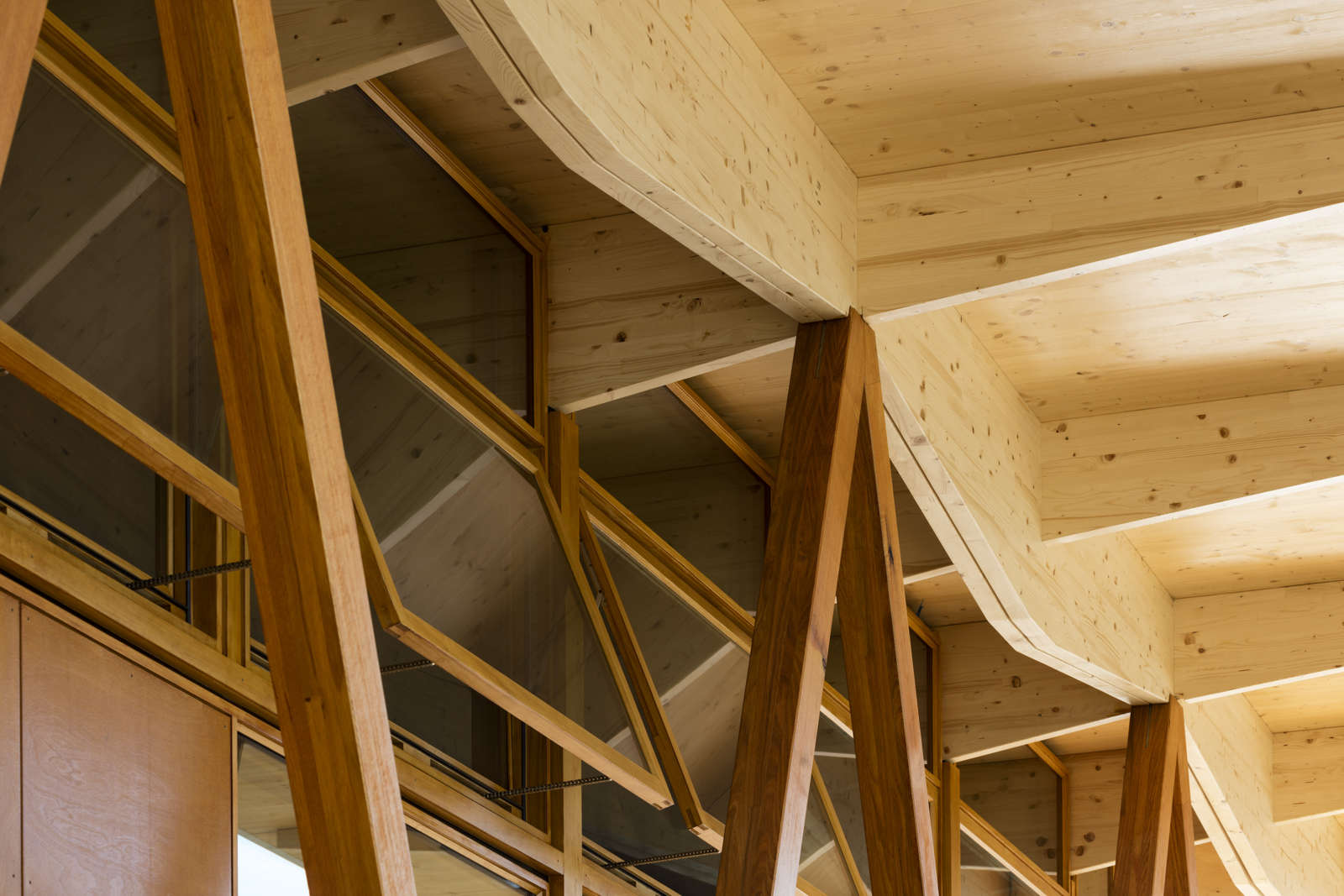
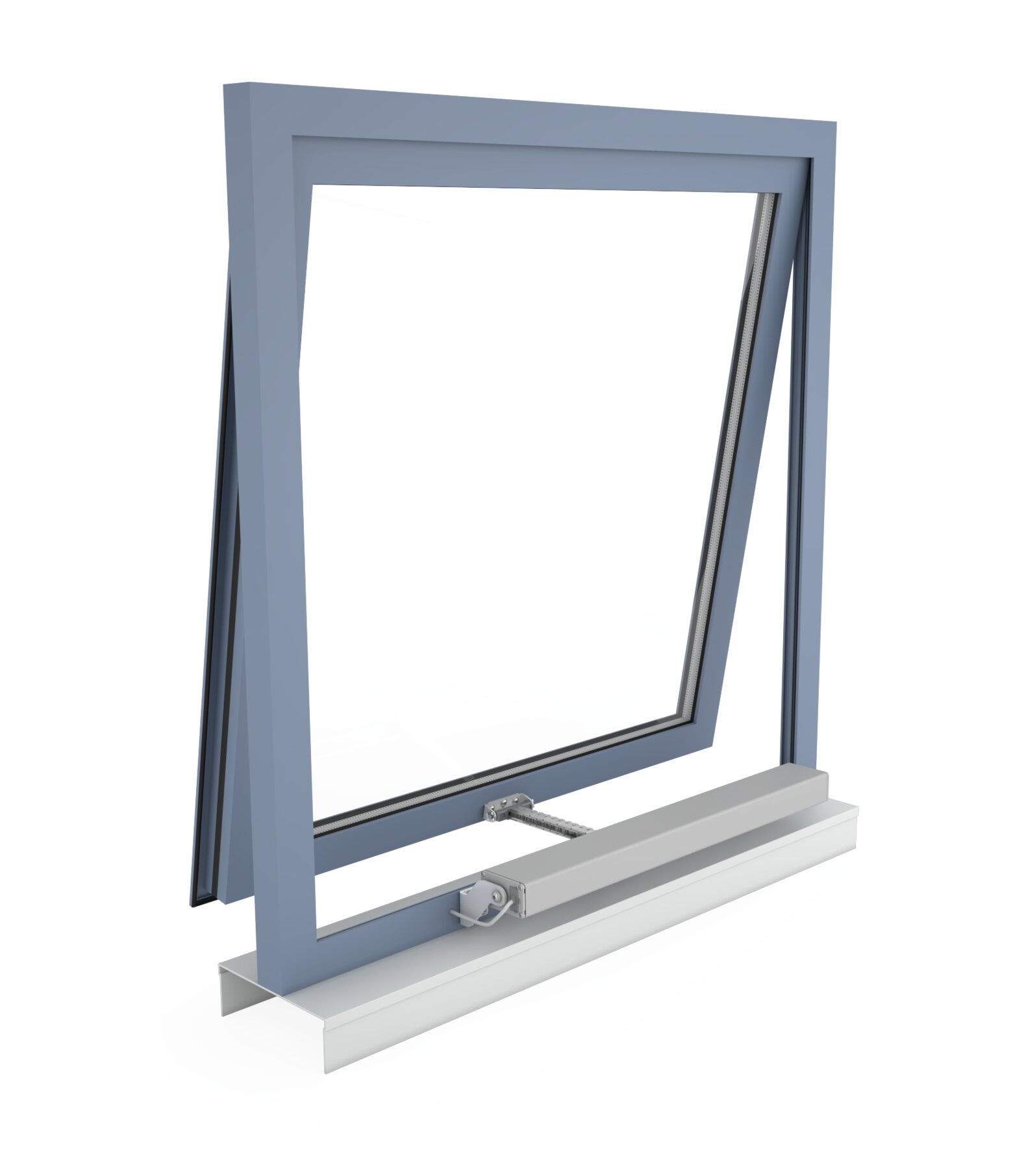
Chain actuators provide compact, controlled movement across a wide range of automated window and facade applications. The drive housing can be integrated discreetly with the opening while the chain transfers movement to the sash through a bracket arrangement selected around the actual window geometry.
The correct chain drive is determined by more than a nominal force or stroke. EBSA considers the opening type, dimensions, weight, hinge or pivot condition, seals, required opening, operating and closing forces, drive position, mounting space, speed, synchronisation, power supply, feedback and the way the opening needs to operate within the wider control system.
Working across the current D+H Mechatronic chain-drive range, EBSA selects from VCD, CDC, KA, CDM and CDP families to suit different commercial opening conditions, control architectures and project requirements.
Different chain-drive families suit different windows. The family follows the opening and the required operation.
01
COMPACT ACTUATION
Controlled movement integrated with the window or facade opening
02
FAMILY RANGE
VCD, CDC, KA, CDM and CDP pathways for different project conditions
03
COORDINATED MOVEMENT
Single-drive and multi-drive openings developed as one operating element
04
COMPLETE SYSTEM
Actuation coordinated with mounting, wiring, controls, feedback and commissioning
CHAIN ACTUATION
A compact drive principle with a wide range of commercial applications.
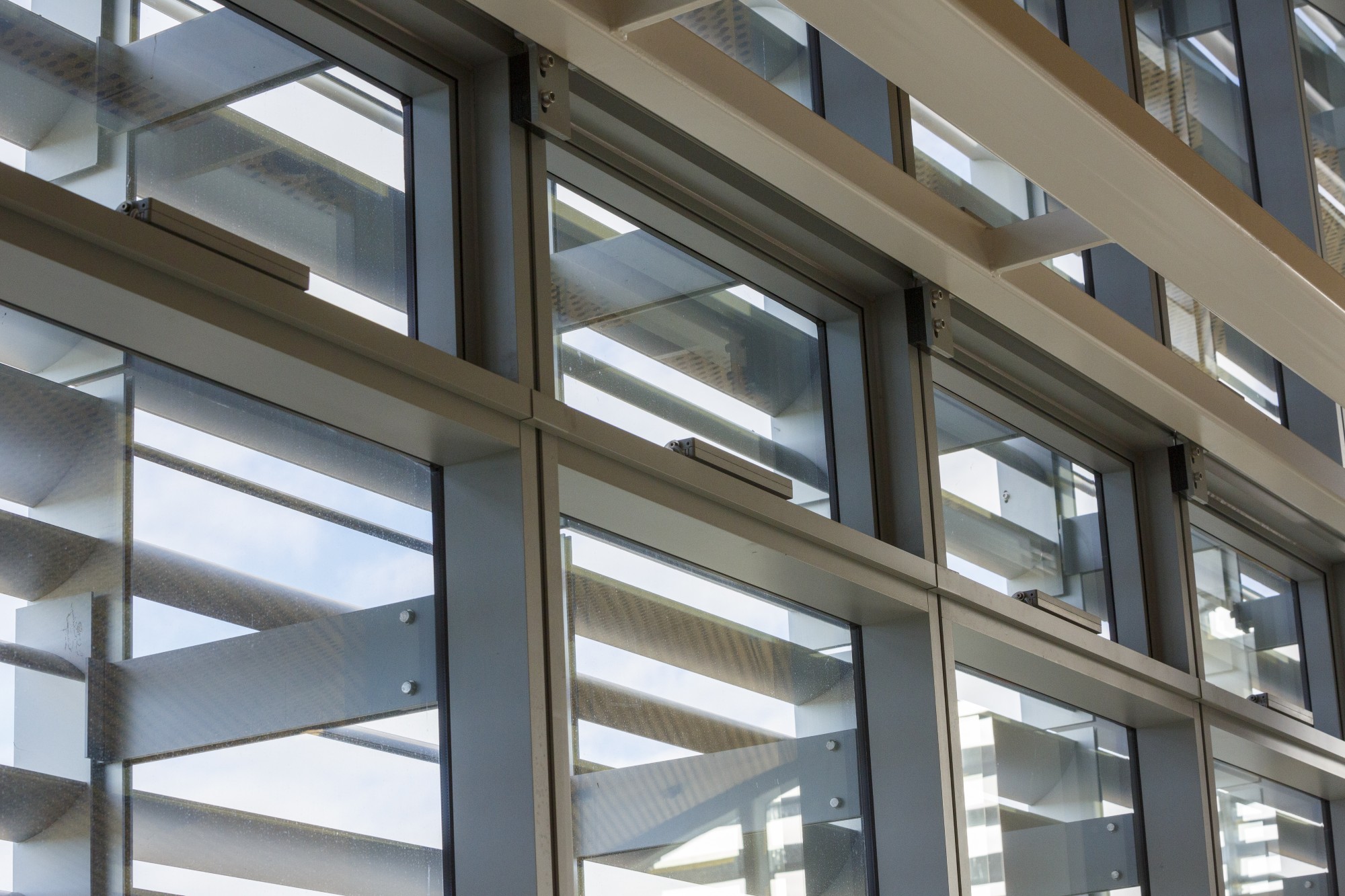
A chain actuator stores the operating chain inside a relatively slim drive housing and extends that chain to move the opening. This makes chain-drive technology particularly useful where the project requires automated movement without introducing a large exposed linear actuator into the facade composition.
Different chain-drive families and bracket arrangements can suit different facade windows, roof openings and other operable elements. Depending on the selected model and system requirement, chain actuators can form part of day-to-day natural ventilation, smoke ventilation or combined operating strategies.
The application still has to be resolved around the actual opening. Available mounting zone, chain geometry, bracket position, sash stiffness, seals, opening direction, weather exposure, access and the control architecture can all change which family and arrangement is appropriate.
The chain drive is compact. The engineering decision around it is not.
01
OPENING GEOMETRY
What does the sash actually need to do through the complete movement?
02
MOUNTING POSITION
Where can the drive and brackets be located without compromising the window, facade or future access?
03
REQUIRED OPENING
What travel and geometry are needed to achieve the required opening or aerodynamic function?
04
LOADS + CLOSING
What operating and closing forces are created through the real window and bracket geometry?
05
DRIVE ARRANGEMENT
Is one actuator appropriate, or does the opening require a coordinated multi-drive solution?
06
CONTROL REQUIREMENT
How will the drive be powered, commanded, synchronised, monitored and integrated with the wider system?
D+H CHAIN DRIVE RANGE
Five current families cover very different opening conditions.
VCD, CDC, KA, CDM and CDP are all chain-drive families, but they are not interchangeable products with different names. Each family occupies a different part of the D+H range, with variations in physical format, available force and stroke, mounting approach, power supply, drive electronics, synchronisation and communication capability.
EBSA uses the family range as a selection toolkit. The project requirement is resolved first; the appropriate family, model, bracket and control technology follow from that decision.
VCD
VCD SERIES
Compact chain-drive technology for facade and roof-window applications where a discreet mounted solution and controlled operation are important. Current VCD pathways include conventional and digitally configurable variants, with different supply and communication options available across the family.
CDC
CDC SERIES
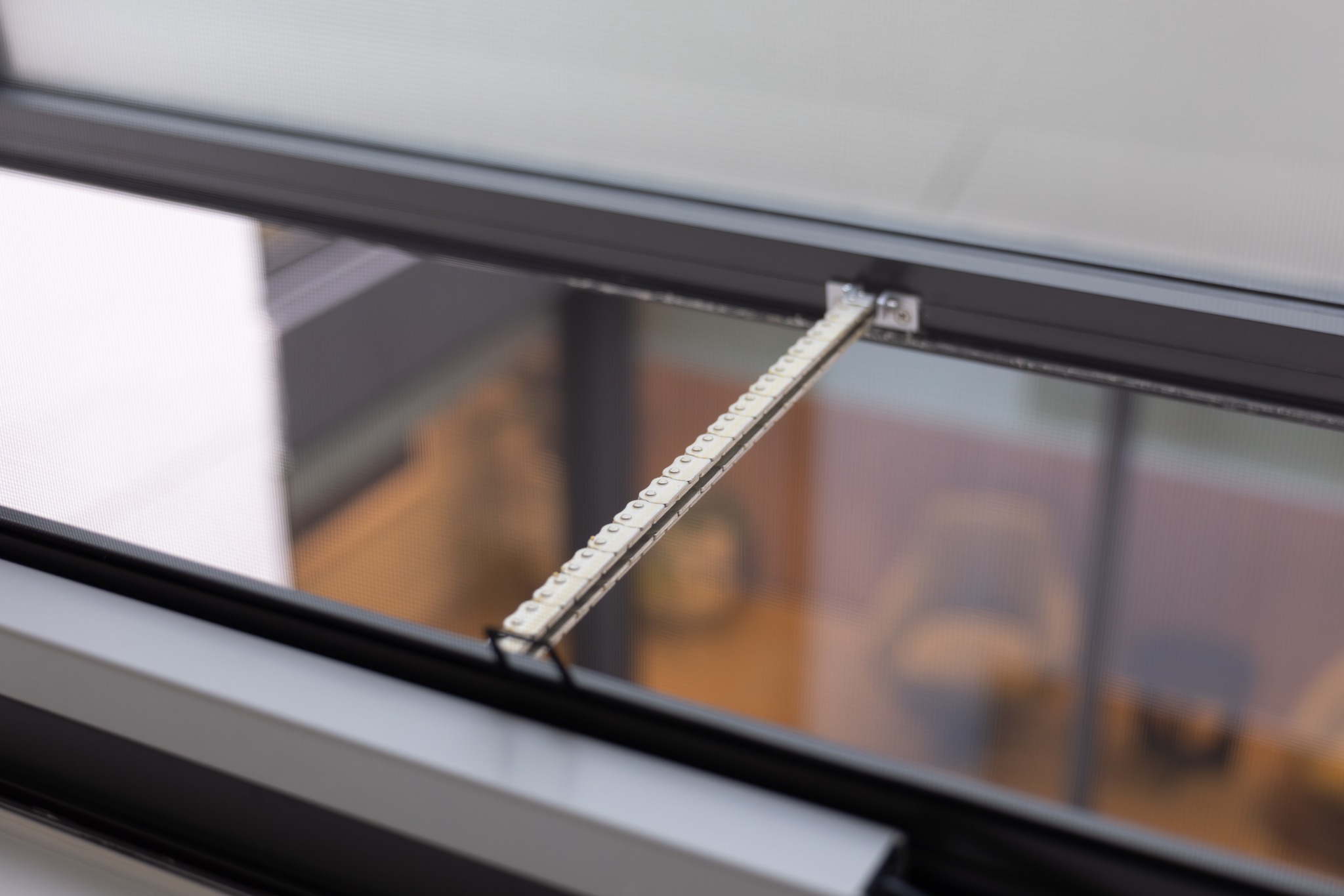
Compact, especially quiet chain-drive technology that can be integrated into suitable window profiles or surface mounted. The CDC family supports refined architectural applications as well as coordinated multi-drive and digital-control pathways across applicable variants.
KA
KA SERIES
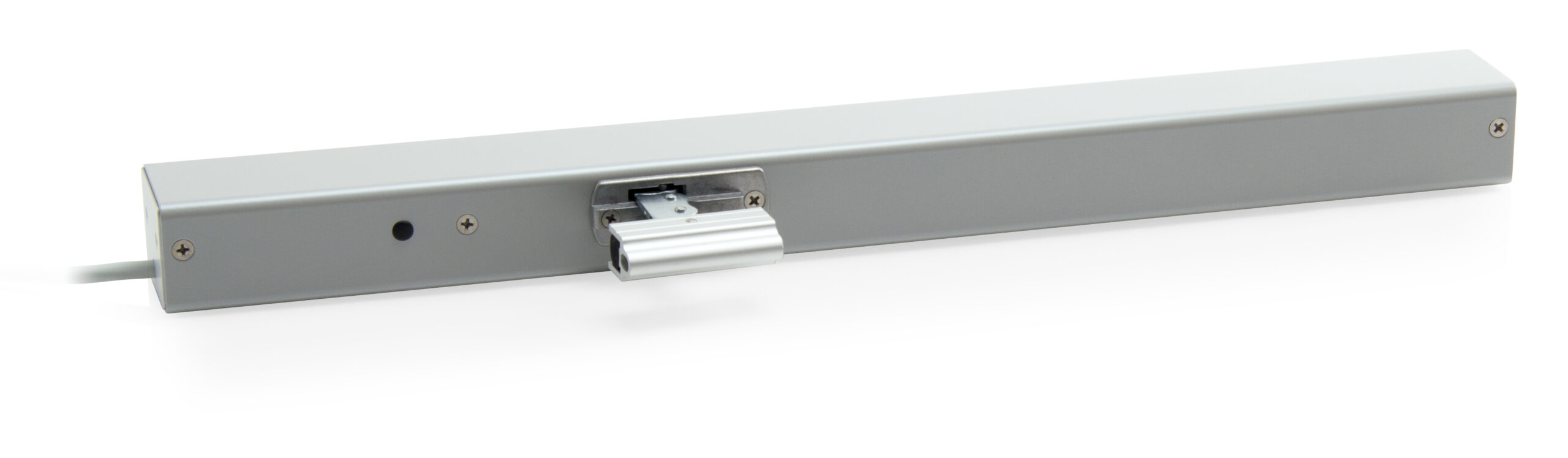
A robust and flexible mounted chain-drive family with a broad range of bracket and configuration options. KA remains an important pathway where the project needs an established, adaptable drive platform across daily ventilation and smoke-ventilation applications.
CDM
CDM SERIES
A compact high-power chain-drive platform for heavier or more demanding windows where increased output is required without moving to a rack-and-pinion drive principle. Its design supports demanding facade and roof-opening applications while retaining the packaging advantages of a chain drive.
CDP
CDP SERIES
The high-performance end of the D+H chain-drive range for large and heavy openings requiring substantially greater operating capability. CDP provides a pathway for demanding roof and facade applications where high output and coordinated multi-drive operation may be required.
The family name is not the specification. Final selection still depends on the opening, mounting, control architecture and required operation.
SELECTION ENGINEERING
Chain-drive selection is an engineering decision, not a model-number lookup.
Two windows with similar dimensions can require different actuator solutions because their hinge geometry, weight distribution, seals, bracket positions, required openings, frame construction or operating strategy are different. The actuator therefore has to be selected in the context of the complete opening rather than from a single nominal rating.
EBSA develops the selection from the opening geometry through to the installed control system. This keeps the actuator, brackets, electrical requirements and required behaviour aligned before the project reaches installation.
01
WINDOW + OPENING GEOMETRY
02
REQUIRED OPENING
03
LOADS + CLOSING
04
DRIVE POSITION + BRACKETS
05
FAMILY + TECHNOLOGY
06
CONTROL + FEEDBACK
07
TESTING + COMMISSIONING
01
OPENING + HINGE GEOMETRY
Establish the sash dimensions, opening direction, hinge or pivot condition and the relationship between actuator position and movement.
02
STROKE + ACHIEVED OPENING
Determine the chain travel and bracket geometry required to achieve the intended opening rather than assuming nominal stroke equals final window opening.
03
OPERATING + CLOSING FORCES
Consider the real operating loads, seals and closing condition through the complete movement of the window.
04
MOUNTING + PROFILE INTEGRATION
Coordinate housing size, bracket position, frame structure, clearances, finishes and the visual relationship with the facade system.
05
POWER + CABLING
Select the drive and control pathway together so power supply, current demand, cable routes and field wiring can be coordinated correctly.
06
SYNCHRONISATION + FEEDBACK
Where the opening requires multiple drives or additional control functions, resolve the appropriate drive electronics and control architecture at the same time as the mechanical arrangement.
07
SPEED + ACOUSTICS
Match operating speed and noise expectations to the application, building use and required operating sequence.
08
ACCESS + MAINTAINABILITY
Ensure the installed drive, brackets and electrical connections can be accessed appropriately for commissioning, inspection and future service.
09
SAFETY + USER INTERACTION
Consider how occupants may interact with the automated opening and develop the operating strategy around the application.
Nominal stroke is not the same as achieved opening, and nominal force is not the complete loading condition.
MECHANICAL INTEGRATION
The bracket and actuator position are part of the design.
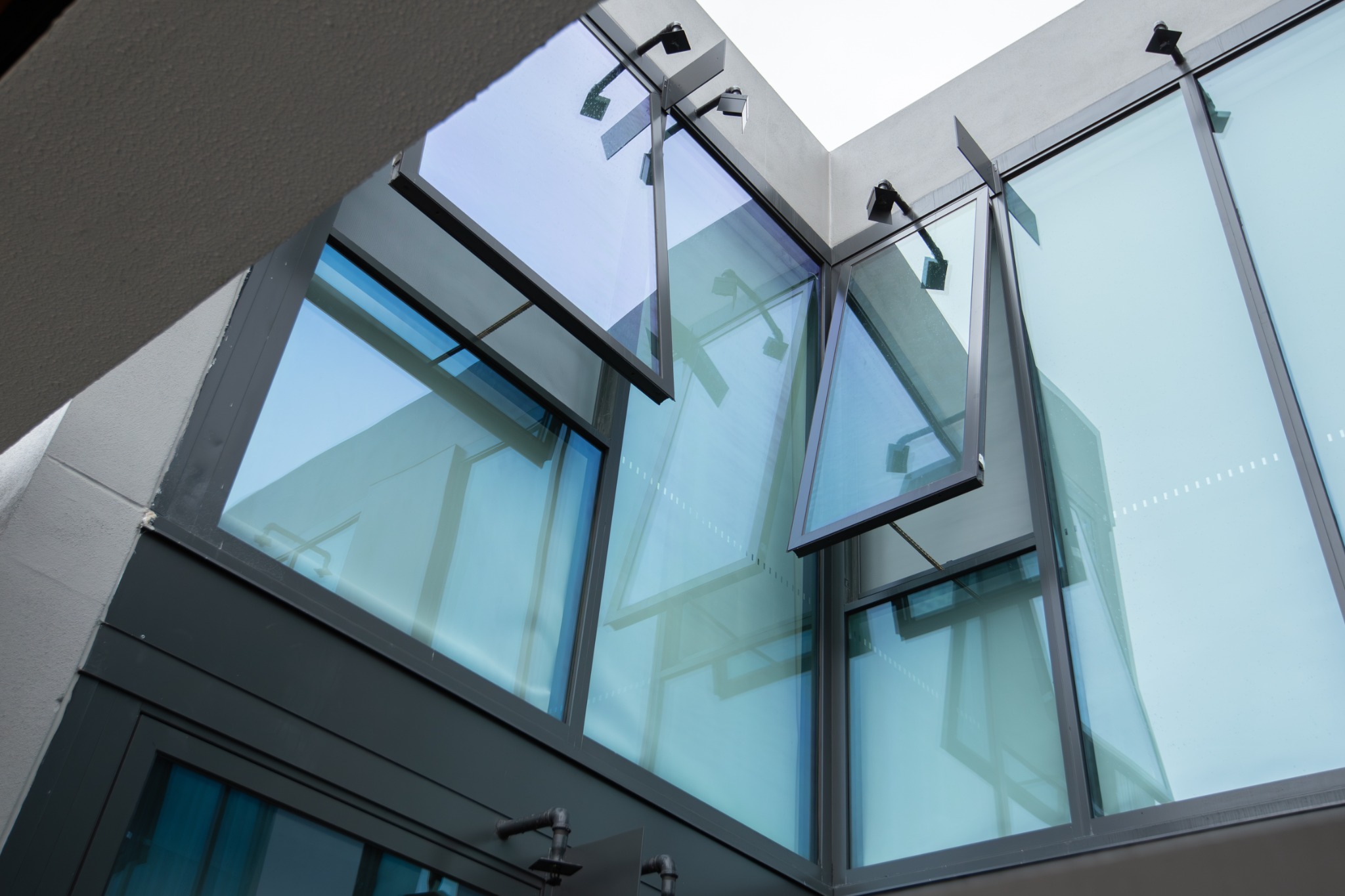
The same actuator can behave very differently when its position or bracket geometry changes. Chain angle, lever arm, sash movement, frame stiffness, seals and available structure all influence how the actuator transfers force into the opening.
For commercial projects, actuator coordination therefore needs to happen with the window or facade system rather than after the frame has been finalised. EBSA reviews the available mounting zone, suitable D+H bracket arrangements, clearances, cable entry, finishes and access so the actuation can be incorporated cleanly into the facade detail.
Where profile-integrated drives are being considered, the window system and fabricator need to be coordinated around the applicable drive geometry and installation requirements from an early stage.
Mounting is not an accessory decision. It is part of actuator selection.
COORDINATED MOVEMENT
One sash may need one drive — or a coordinated group.
Window width, stiffness, load distribution, sealing and the required movement can make more than one actuator appropriate on a single opening. In those cases, drive quantity and position, synchronisation technology, electrical loading, feedback and commissioning need to be developed together.
D+H uses different synchronisation and drive-control technologies across applicable chain-drive families and models. EBSA treats the complete sash as one operating element, selecting the mechanical arrangement and control pathway together rather than simply adding another actuator when a window becomes larger.
The result may be a tandem or synchronised arrangement, a digitally addressed group or another coordinated architecture appropriate to the selected drive family and project requirement.
ONE OPENING / ONE DRIVE
ONE OPENING / COORDINATED MULTIPLE DRIVES
Adding a second drive changes the system architecture as well as the hardware.
ACTUATION + CONTROLS
Drive electronics change what the system can do.
Chain-drive selection and control-system selection are connected. Different D+H chain-drive models use different motor-electronics and communication technologies, which can affect configuration, synchronised operation, status information, diagnostics and the way the drive is connected into the wider control architecture.
CLOSING EDGE PROTECTION + PROGRAMMABLE MOVEMENT
D+H drive electronics can be configured so speed and force vary through defined opening and closing ranges rather than remaining constant across the full stroke. On applicable drives, this allows the final stages of closing to operate at reduced speed and force while the remainder of the movement is configured around the opening and required operation.
Closing-edge protection combines passive and active functions. Passive protection reduces the closing speed in the final closing ranges. Active protection monitors for overload at the main closing edge; if an obstruction is detected, the drive reverses in the opening direction before attempting to close again. On applicable D+H configurations the closing attempt can repeat up to three times before the drive remains stopped.
This is another reason actuator selection, drive programming and the operating strategy should be developed together rather than treating the motor as a fixed-output device.
reduced closing speed in the final closing ranges
overload detection followed by reversal and retry
Across applicable current products, the D+H range includes technologies such as PLP, BSY+, TMS+ and ACB. These are not interchangeable labels and are not available across every chain-drive family or model. EBSA selects the relevant drive technology around the required operating behaviour and the control platform being used on the project.
PLP
Programmable drive functionality used on applicable D+H drive variants where project-specific drive parameters need to be configured.
BSY+
D+H synchronisation technology used on applicable drive variants where multiple actuators need to operate together as a coordinated group.
TMS+
Tandem-drive technology used on applicable models for coordinated operation of two drives on one opening.
ACB
D+H Advanced Communication Bus technology used on applicable drives for configurable digital communication, control and status functions within a compatible architecture.
The actuator, its electronics and the control system should be selected as one operating architecture.
APPLICATION CONTEXT
The same drive principle can sit inside very different operating systems.
Chain actuators are used across both day-to-day ventilation and smoke-ventilation applications, but the role of the drive is defined by the wider system. The selected actuator, control architecture, power arrangement, monitoring, interfaces and operating sequence all need to suit the project requirement.
Natural Ventilation
For natural ventilation, the actuator may operate in response to local user control, temperature or air-quality strategy, weather inputs, time schedules, BMS commands or coordination with mechanical systems.
Smoke Ventilation
For smoke ventilation, the opening forms part of an emergency operating sequence coordinated with the relevant smoke-control architecture and building fire interfaces. The applicable actuator model, control system and complete opening assembly must be selected for the required application.
PROJECT PROOF
Different chain-drive families solve different project conditions.
EBSA’s project work demonstrates why chain actuators should be selected around the opening and system requirement rather than treated as one generic hardware type. Compact architectural installations, mixed natural-ventilation systems, high-performance openings and specialist multi-drive arrangements can all sit within the same chain-drive category while requiring very different engineering decisions.
PROJECT
MACQUARIE UNIVERSITY INCUBATOR — SYDNEY
CDC chain drives integrated into an architectural window system.
The Macquarie University Incubator uses D+H CDC chain drives on automated timber-framed awning windows. The project provides a clear example of compact chain-drive technology coordinated with the window design and architectural expression rather than treated as exposed standalone hardware.
View Project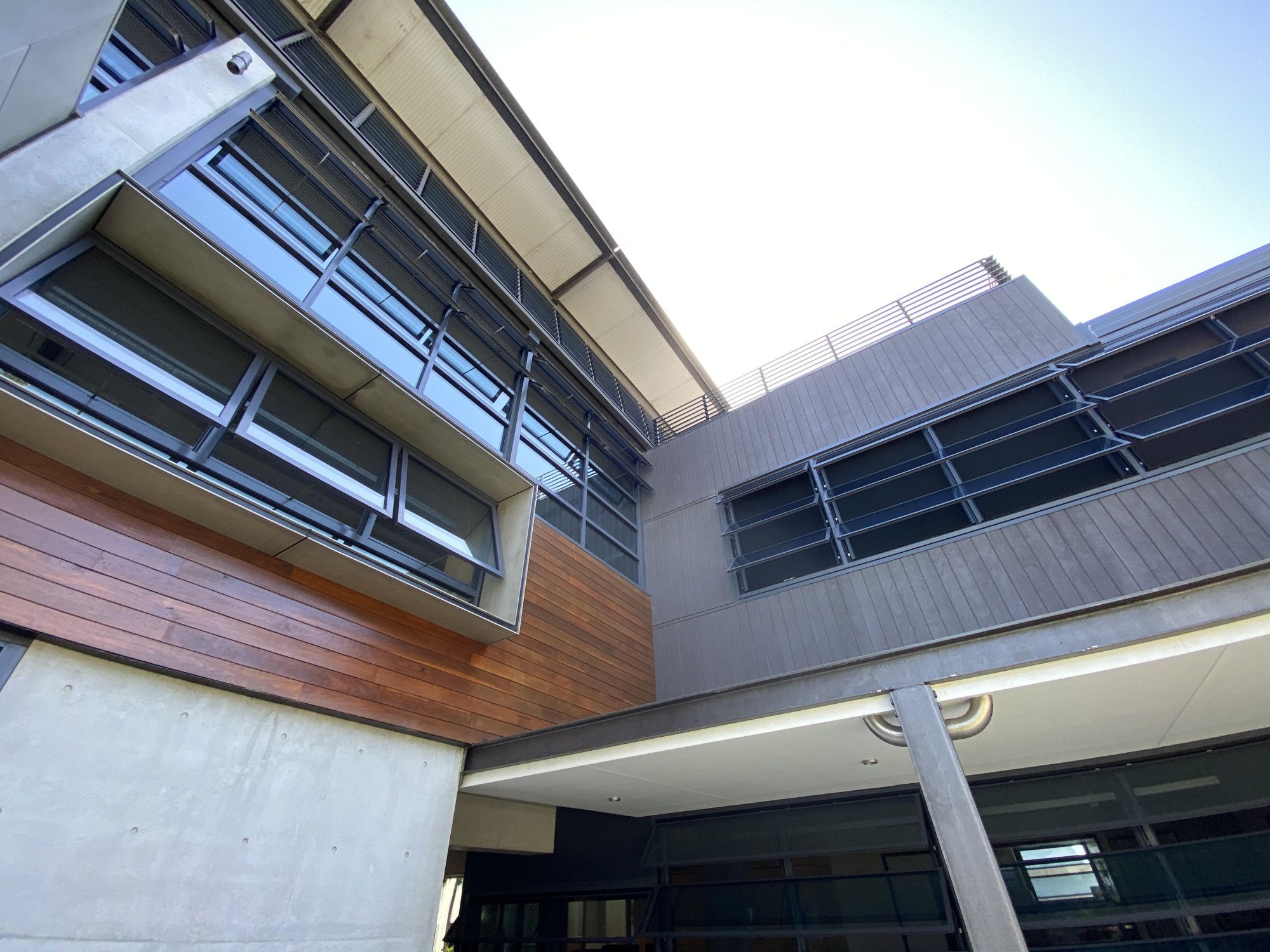
PROJECT
NORTHERN BEACHES CHRISTIAN SCHOOL — SYDNEY
VCD and CDC drives used within a broader natural-ventilation strategy.
Across multiple stages at Northern Beaches Christian School, EBSA used different D+H chain-drive families as part of a wider facade-automation and natural-ventilation system. The project demonstrates that actuator selection can vary within one building strategy according to the individual opening and control requirement.
View ProjectPROJECT
SUNHILL WINERY
CDP chain drives developed around large outward-opening windows.
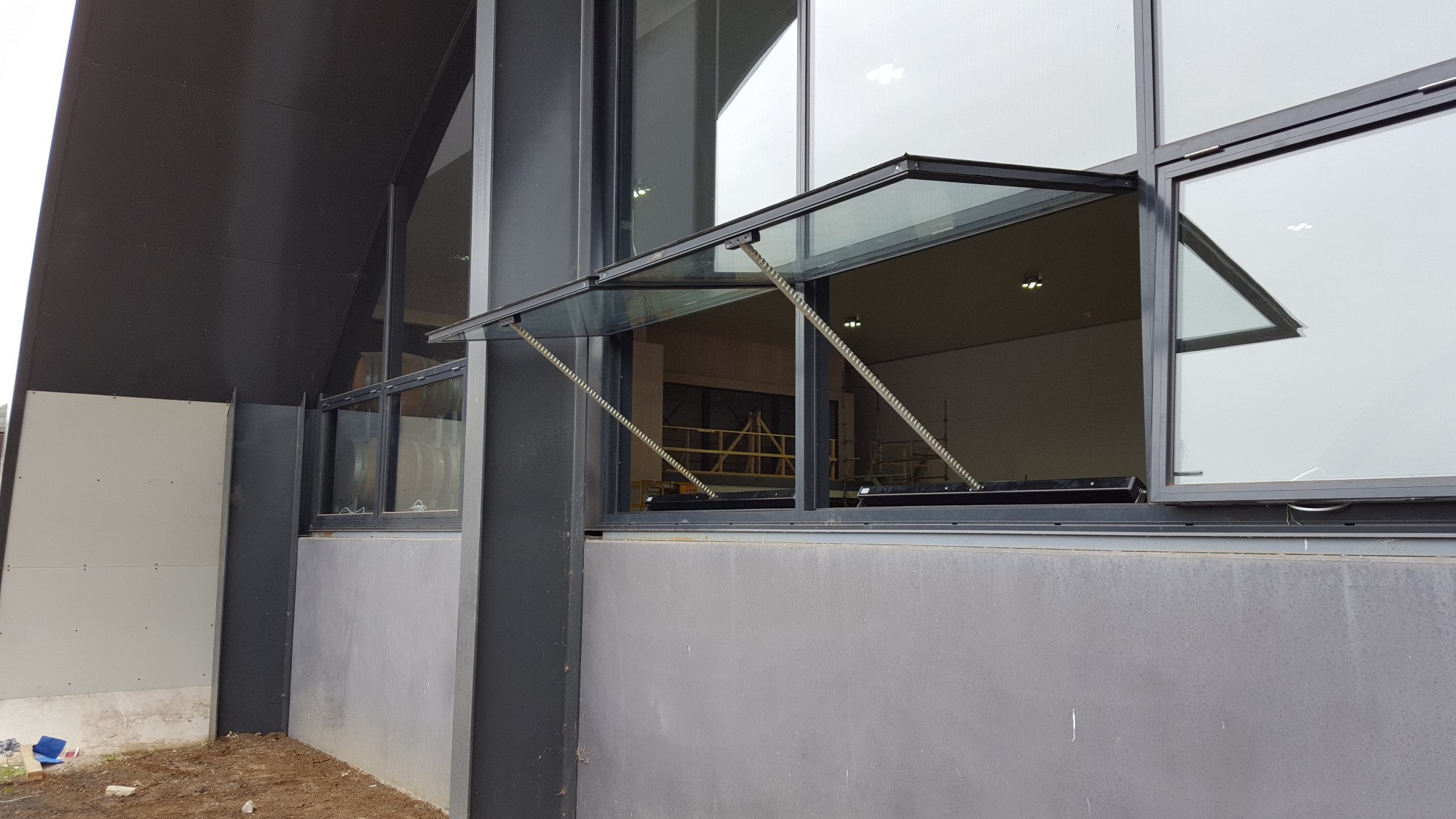
At Sunhill Winery, D+H CDP chain drives were used on large outward-opening glazed windows. Prototype testing of the window and drive arrangement provided a practical way to validate the actuation concept before project installation.
View ProjectCURRENT DELIVERY
55 PITT STREET — SYDNEY
Specialist CDM multi-drive actuation developed around demanding window geometry.
The 55 Pitt Street window-automation design uses D+H CDM drives in a specialised arrangement with three drives mounted vertically to each applicable window. The project demonstrates how drive family, quantity and position can be developed around a demanding facade opening rather than a standard hardware layout.
View ProjectTECHNICAL RESOURCES
Chain-drive guidance for designers, facade teams and specifiers.
Detailed actuator selection depends on information that sits beyond a product family name. EBSA’s technical resources support the opening geometry, electrical coordination, control-system and safety decisions that need to be resolved around chain-drive window automation.
01
WINDOW ACTUATOR SELECTION GUIDE
Understand how opening geometry, stroke, load, drive position, synchronisation, mounting and control requirements influence actuator selection.
02
WINDOW AUTOMATION ELECTRICAL REQUIREMENTS
Coordinate power supplies, field cabling, voltage drop and communication requirements around the selected actuators and control architecture.
03
AUTOMATED WINDOW SAFETY
Consider operating behaviour, user interaction and the safety strategy appropriate to the application.
04
CAD + BIM + DOWNLOADS
Access available D+H drawings, product documentation and digital design resources for selected chain-drive families.
05
LEGACY D+H PRODUCT SUPPORT
Identify installed or superseded D+H chain drives and develop appropriate replacement, compatibility, service or upgrade pathways.
PROJECT DELIVERY
Carry the chain-drive decision through the complete project.
Selecting the correct chain actuator is only the start. The drive and bracket arrangement still has to be coordinated into drawings, power and cabling requirements, the window or facade package, control-system design, installation and commissioning.
EBSA maintains that connection through project delivery so the actuator selection made during design is carried through to the installed opening and tested operating system.
01
WINDOW DATA
02
ACTUATOR + BRACKET ASSESSMENT
03
DRIVE FAMILY + TECHNOLOGY
04
SHOP DRAWINGS
05
FACADE / WINDOW COORDINATION
06
SUPPLY
07
INSTALLATION + FIELD CABLING
08
CONTROLS
09
COMMISSIONING
10
SERVICE + UPGRADES
CHAIN DRIVE SELECTION
Start with the opening. Select the chain drive from there.
Whether the project needs a compact integrated drive, a robust mounted actuator, a coordinated multi-drive arrangement or a high-performance chain-drive solution, EBSA can help define the family, mounting and control pathway around what the opening needs to achieve.